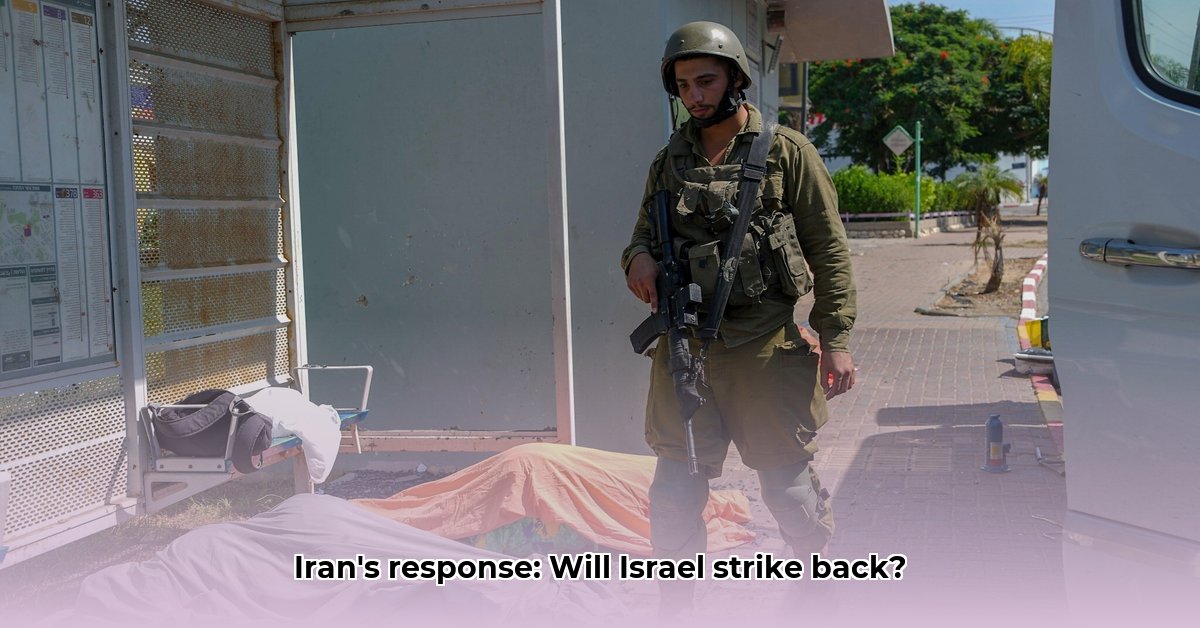
This week's events in the Middle East have heightened global anxieties. Israel's targeted operations against Iranian interests have significantly escalated tensions, leaving the region teetering on the brink. Understanding the complexities requires a nuanced approach, examining the situation from multiple perspectives.
Israel’s Actions: A Calculated Gamble?
Israel's recent targeted strikes against alleged Iranian assets have sparked intense debate. The stated objective is to curb Iran's regional influence without triggering all-out war – a high-stakes gamble. This strategy mirrors a game of chess played with a loaded weapon; a single miscalculation could have catastrophic consequences. The central question remains: can Israel effectively contain Iran without igniting wider conflict? The answer, unfortunately, remains elusive.
Isn't it concerning that the success of this strategy hinges on so many unpredictable variables? Reports indicate that Iran's government appears outwardly calm, but this could be a deceptive façade. A crucial piece of the puzzle is how the Iranian populace perceives the situation – is simmering discontent brewing beneath the surface, potentially affecting the regime's stability? The lack of reliable information currently makes definitive conclusions impossible.
Even with a stable Iranian government, the risk of heightened regional instability persists. Iran-backed groups might retaliate, sparking proxy conflicts and escalating violence. External factors, including US policy and international sanctions, further complicate this already delicate equation.
Assessing the Damage: What We Know and Don't Know
The scarcity of verifiable information currently hampers a comprehensive assessment. Much of the available information originates from Israel, making objective analysis challenging. Independent verification remains essential. While initial reports suggest a degree of success in disrupting Iranian operations, the long-term implications remain unclear. Professor Avi Shlaim, Emeritus Professor of International Relations at St Antony's College, Oxford, cautions against overestimating Israel's capabilities, stating, "Israel's military advantage, while significant, is not unlimited. Iran possesses considerable resilience and the capacity for strategic retaliation". This underscores the need for caution in interpreting the immediate aftermath of these operations.
How does the ordinary Iranian citizen feel about this? Do they support the government's response, or is resentment brewing? We lack this crucial contextual information.
Who's Involved and What Are Their Aims?
Several key players are involved, each pursuing their own interests and objectives.
| Stakeholder | Short-Term Goals | Long-Term Aspirations | Potential Actions |
|---|---|---|---|
| Israel | Contain Iran’s influence; deter further aggression | Secure regional dominance; ensure long-term security | Targeted strikes; bolstering alliances; diplomatic efforts |
| Iran | Assess the damage; consider retaliation; maintain stability | Weaken Israel’s influence; pursue regional hegemony | Proxy attacks; diplomatic maneuvering; internal consolidation |
| Regional Actors (e.g., Saudi Arabia, other Arab nations) | Maintain stability; protect their interests | Secure regional influence; prevent wider conflict | Cautious observation; strategic alliances; possible involvement |
| International Community | De-escalate tensions; prevent wider conflict | Promote peace and stability; address underlying issues | Sanctions; diplomacy; peacekeeping efforts |
The interconnectedness of these stakeholders' actions creates a dynamic and unpredictable situation. Each move impacts others, generating a ripple effect with far-reaching consequences.
The Risks: A Forward Look
Several significant risks threaten regional stability.
| Risk Category | Likelihood | Potential Impact | Possible Mitigation Strategies |
|---|---|---|---|
| Full-Scale Conflict | Moderate | Extremely High | Strong diplomatic efforts; de-escalation strategies |
| Regional Instability | High | High | Strengthening regional cooperation; conflict mediation |
| Unintended Consequences | Moderate | Moderate to High | Thorough planning; improved intelligence gathering; risk assessments |
| Internal Upheaval in Iran | Low | Moderate to High | Close monitoring of internal dynamics; careful response planning |
The inherent uncertainties highlight the need for continuous monitoring and cautious interpretation of events.
What Happens Next? Navigating the Unknowns
Predicting the future in this volatile region is akin to forecasting a sandstorm. Will Israel's strategy deter further aggression? Will Iran retaliate, and if so, how? Could this escalate into a wider conflict involving regional or international powers? These questions underscore the need for vigilance and responsible analysis. Continuous monitoring and adaptation are crucial in navigating this evolving situation.
Key Takeaways:
- The current situation represents a dangerous escalation of regional tensions.
- Israel’s actions, although presented as retaliatory, carry significant risks.
- Iran’s response suggests a willingness to escalate, if necessary.
- The international community’s response has been fragmented and inconsistent.
- De-escalation requires a multifaceted approach focused on diplomacy, regional cooperation, and addressing root causes.